

Distressed property: where value leaks and how to protect it
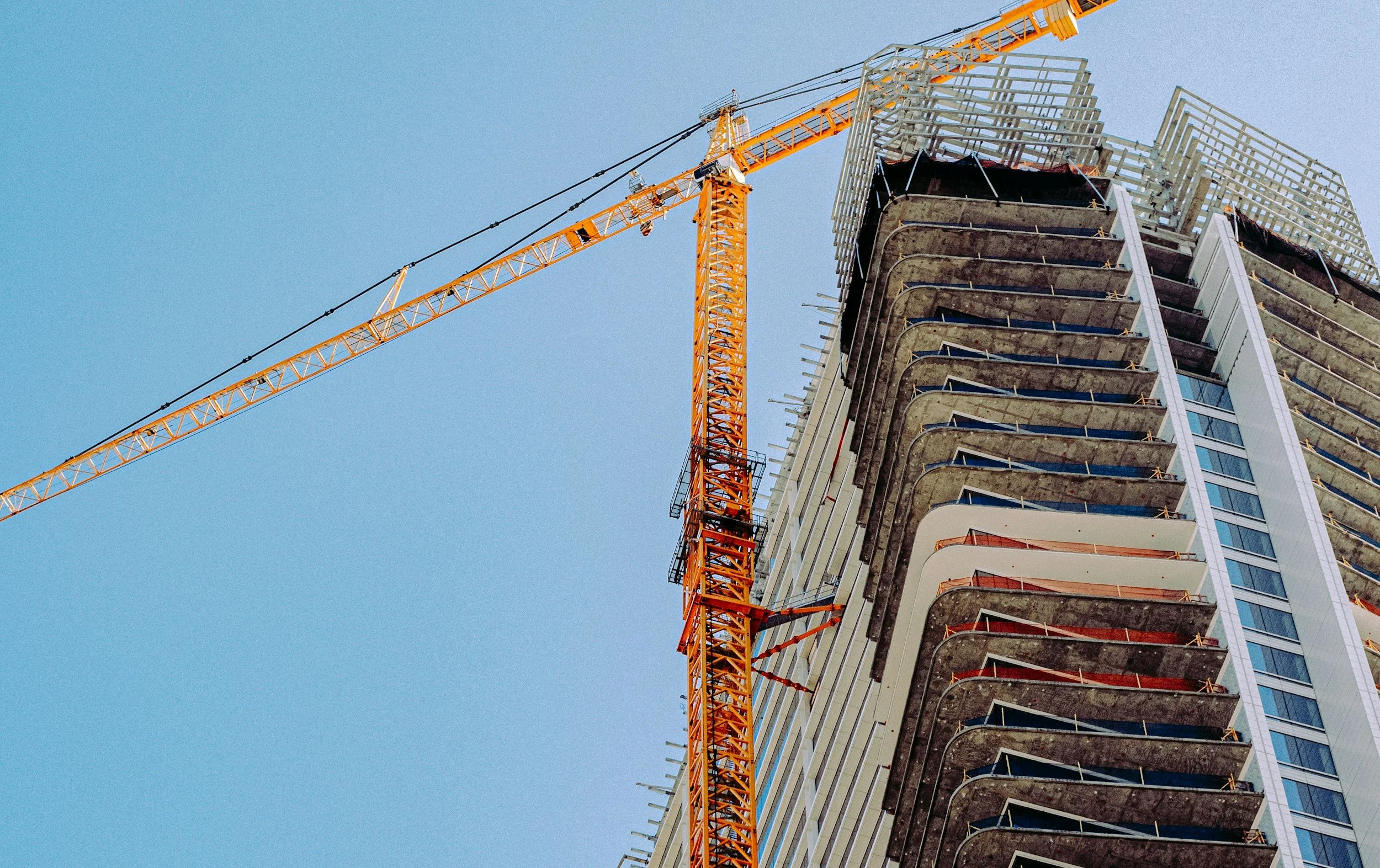
A distressed property rarely fails cleanly. By the time it reaches a liquidator, voluntary administrator or lender’s workout desk, the problems have compounded. Construction has stalled. A permit has lapsed. A building order may be taped to the hoarding. Titles may never have issued, leaving off-the-plan purchasers and other contracted buyers in limbo.
A conventional sales campaign can turn each unresolved problem into a discount, or give a buyer a reason to walk away. Unresolved uncertainty can widen the discount a buyer requires. Before the property is listed, the first task is to identify which issues can be resolved, at what cost and in what order.
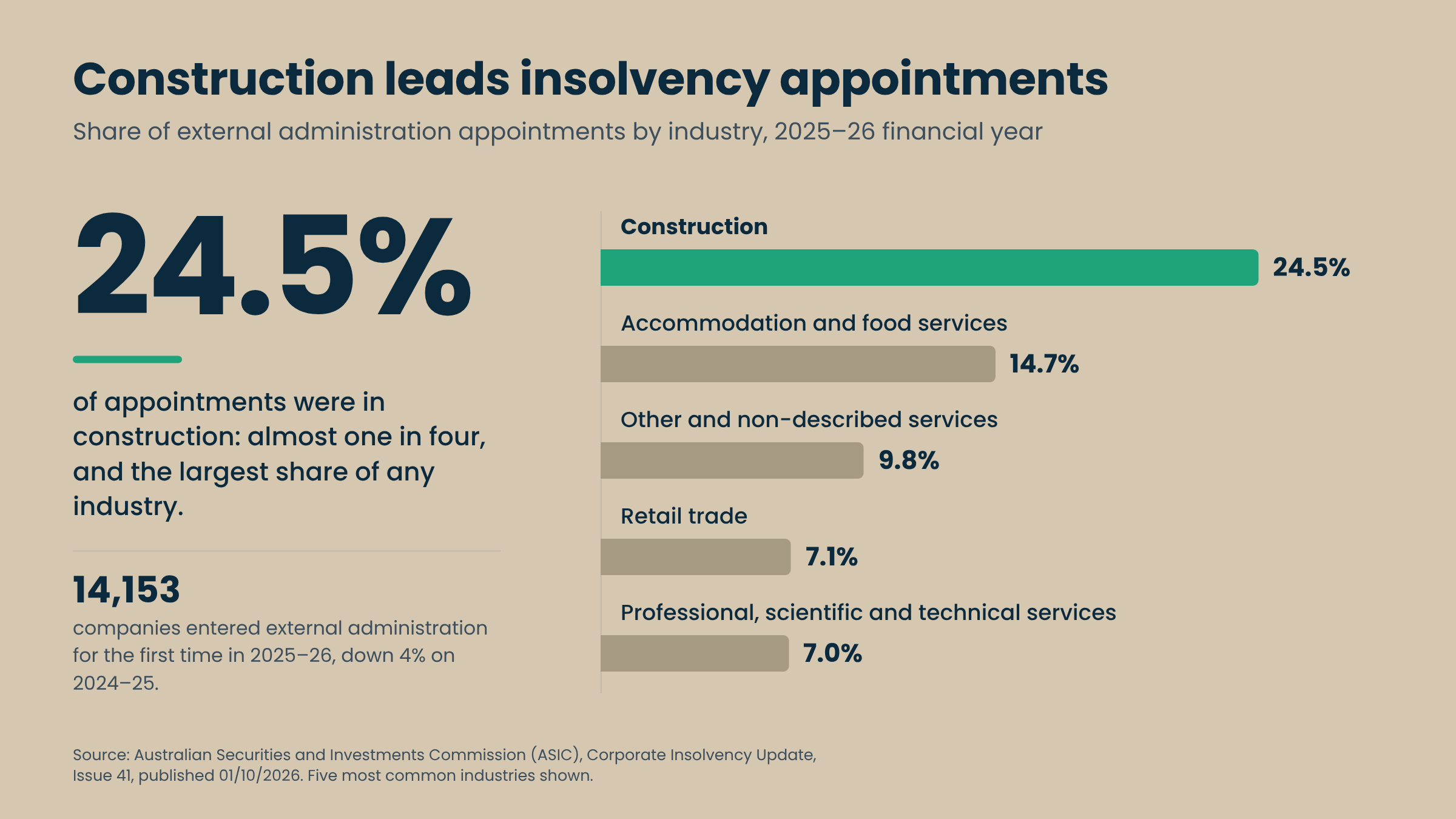
Construction remains a significant source of insolvency appointments. In its October 2026 update, the Australian Securities and Investments Commission (ASIC) reported that construction accounted for 24.5% of appointments in 2025–26, the largest industry share. When a builder or developer fails, a half-finished asset must still be secured, assessed and realised. The question is how much value can survive that process.
The tangle that arrives with the asset
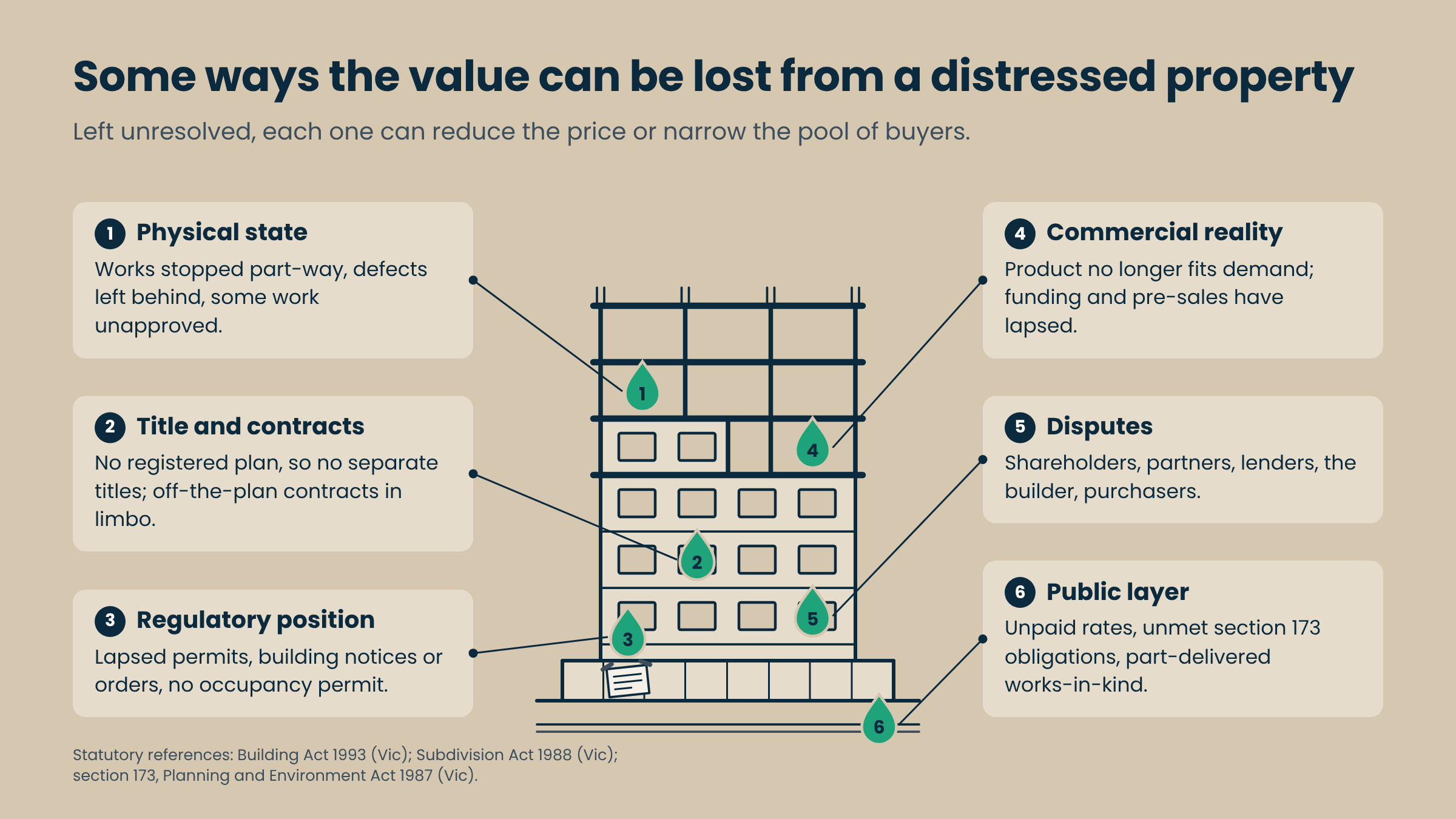
Every distressed site has its own history, but the issues usually fall into a familiar set. Each affects what a buyer will pay, how quickly a sale can proceed and how confidently the eventual decision can be defended.
The physical state
Construction has stopped part-way. Trades have left defects behind them. Some of the work was done without approval, or not to the approval that exists. Materials and fixings degrade while the site sits idle.
The regulatory position
Permits have lapsed or were never obtained. A building surveyor has issued a building notice or a building order under the Building Act 1993 (Vic). Delays in obtaining an occupancy permit can hold up lawful occupation and settlements that depend on it.
The title and the contracts
A plan of subdivision was never registered under the Subdivision Act 1988 (Vic), so there are no separate titles available for settlement. Off-the-plan contracts sit in limbo, exposed to sunset dates and rescission. Deposits are held and contested.
The commercial reality
The project may no longer suit current market demand: unit sizes may be too small, or the product mix may no longer appeal to buyers. Funding may have fallen away and pre-sales may have lapsed. Releasing the entire project at once can also create oversupply, prompting buyers to discount their offers.
The disputes
A distressed asset may carry disputes involving shareholders, joint-venture partners, lenders, the builder, the owners corporation, purchasers or the Australian Taxation Office (ATO). These disputes can constrain the available options.
And sometimes, a public layer
Rates may be unpaid. A section 173 agreement under the Planning and Environment Act 1987 (Vic) may impose obligations on the land that the original developer never fulfilled. A works-in-kind agreement with the council may be only partly delivered, or a bond may remain in place. These matters can affect the purchaser’s risk and the eventual return. Their treatment should be checked against the valuation’s assumptions and the transaction documents.
Council may be a creditor, a counterparty or a regulator, or act in several capacities. Understanding its position before a formal insolvency appointment helps clarify the obligations and securities attached to the site. Unresolved matters can leave council with claims to pursue and regulatory or amenity issues to manage.
Left unresolved, these issues can reduce the price or narrow the pool of buyers.
What to test before committing to a sale
Time and funding constraints may favour an immediate sale. An early assessment helps the practitioner decide whether selected preparation is likely to improve the recovery within those constraints.
A buyer’s offer reflects the cost and risk of taking on unresolved issues. Understanding those issues before marketing helps the seller assess which risks can be resolved or priced more accurately.
There is also a duty dimension. Under section 420A of the Corporations Act 2001 (Cth), a controller selling company property must take all reasonable care to achieve at least its market value, if it has one when sold. Otherwise, the controller must take all reasonable care to achieve the best price reasonably obtainable in the circumstances at the time of sale.
A documented assessment of the options helps explain why a particular course was chosen.
For a liquidator, the analysis should support decisions about net recoveries for creditors, with the costs and risks of further work made explicit.
Preparing the asset for sale
Decisions before listing can materially affect the eventual recovery.
It starts with a diagnosis: the full problem set, mapped, with the liabilities that bleed value each day marked first. Holding costs, insurance, site security, the permit clock, a building left open to the weather. Some of these compound, and they are stabilised before anything else is decided.
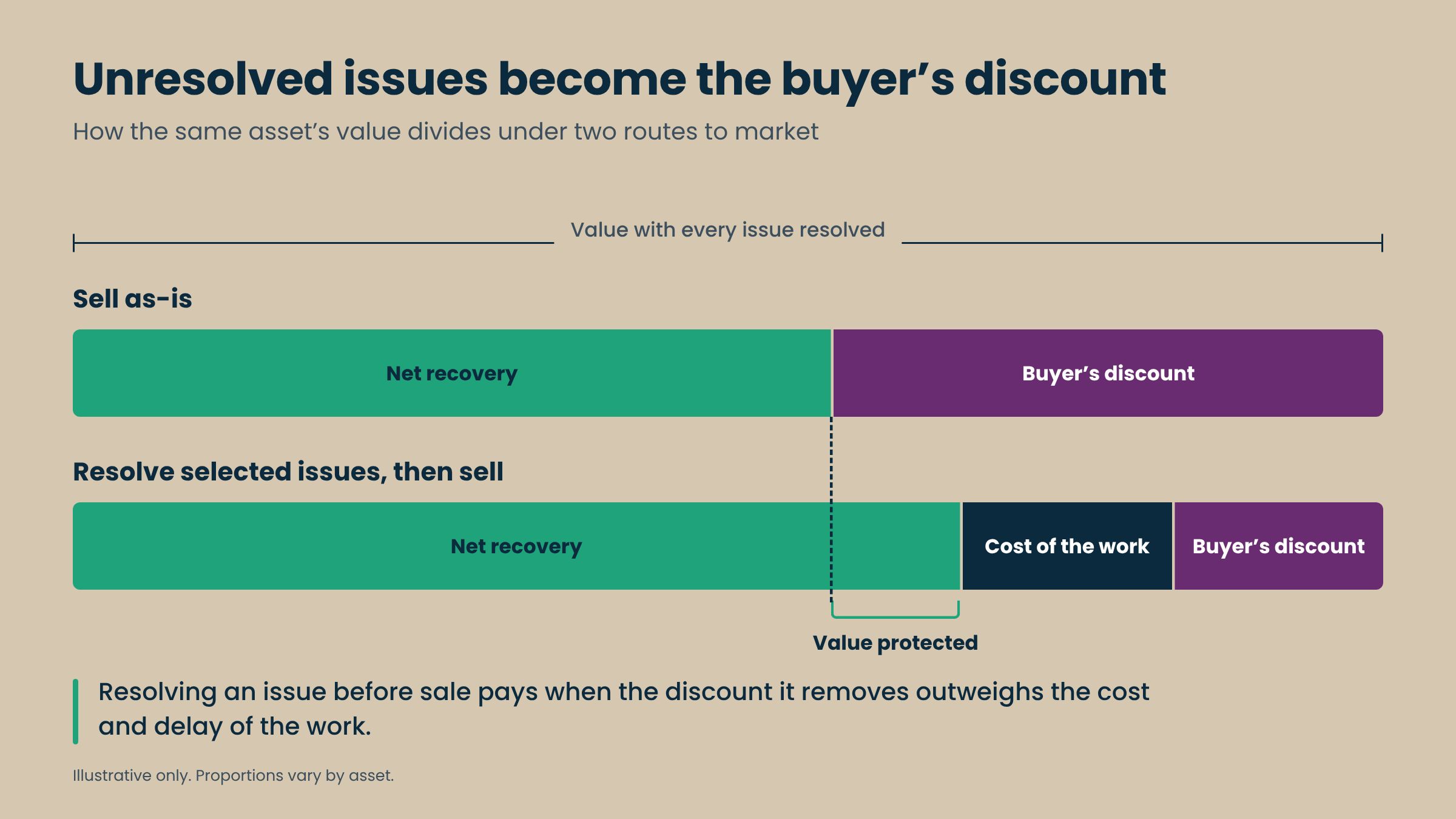
The options should then be modelled rather than assumed. Should the asset be sold as-is or after selected issues are resolved? Should it be sold in one line or released in stages to avoid flooding a thin market? Should a critical piece of work be completed to support the price, or left for a buyer to finish at its own cost and risk? Each path has a price, a timeframe and a risk profile that can be compared before a decision is made.
Compare the expected net recovery after allowing for the cost of intervention, holding costs and selling expenses. Test whether funding is available and how delay could change the outcome. An immediate as-is sale may be the strongest option.
Financial modelling turns a set of assumptions into a decision the practitioner can put in front of creditors with confidence.
The strongest interventions often cut across disciplines, which is also where distressed assets tend to stall. Resolving a section 173 obligation requires engagement with planning rules and the council before it becomes a sales issue. Obtaining an occupancy permit may release settlements that are otherwise unable to proceed. Registering the plan of subdivision creates the separate titles needed for individual settlements. Coordinating these issues as part of one realisation strategy helps the practitioner brief each adviser and manage dependencies between their work
What to do when a distressed property lands on your desk
For a practitioner, a lender, or the lawyers advising either, the sequence is what protects the outcome:
Get the diagnosis before the campaign.
Compare the expected net recoveries from a single-line sale and a staged release before committing to either.
Deal with the liabilities that are bleeding value first. Resolve, or at least map, the permit, title and public-side obligations before a buyer uses them to reset the price.
Record the options considered and the reasons for the decision, including any limits imposed by funding or time.
Protecting recoverable value
Protecting recoverable value starts with identifying the issues that are eroding it and deciding which are worth resolving. The aim is to take the asset to market with as much uncertainty removed as the circumstances allow. A clear record of the options and their expected net recoveries supports the chosen approach.
Estate of the Art advises liquidators, administrators, lenders and their legal advisers on distressed and stalled property. We bring property strategy, financial modelling and public- and private-sector experience together to clarify the options, support a defensible decision and protect recoverable value.
