

Moonee Valley community occupancy framework

Source: Unsplash
Source: Estate of the Art

Source: Moonee Valley City Council
The Challenge: Moonee Valley City Council needed a consistent basis for managing occupation of its community assets. Its draft Property Policy established principles for fair treatment, but officers needed a practical method for setting rents and explaining the support provided to community groups. The framework also had to clarify which agreement applied and how responsibilities should be shared.
Our Intervention: We developed a Community Asset and Occupancy Framework that translated those principles into a repeatable assessment process. Working with Council officers, we reviewed existing arrangements and tested alternative rental methods against the policy objectives. The work connected occupancy decisions with their financial effects on community groups.
Our achievements:
Evidence for policy choices: We examined adopted policies across three metropolitan councils and analysed hundreds of agreements with recorded rents from their published registers. We modelled two rental methods across representative occupancies to show how each approach would affect tenant rents and recorded support.
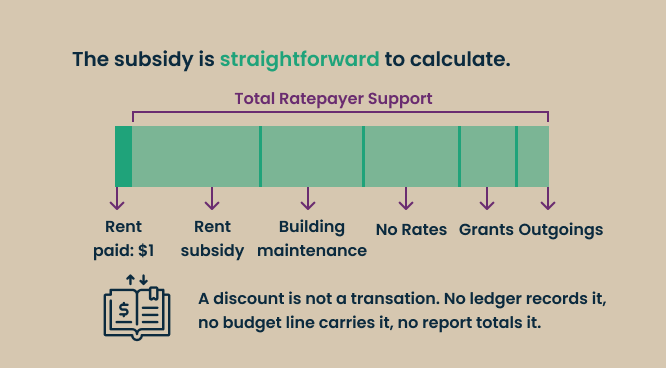
Transparent rent and subsidy rules: We developed a rental method based on the assets each tenant occupies, with defined community support tiers. The model calculates the base rent and the amount the occupier would pay. It records the difference as Council support, with eligibility rules governing access to that support.
Practical agreement decisions: We produced an officer pathway for selecting the appropriate occupancy agreement. It tests the rights granted and the facts of occupation, officers record checks of land status and approval requirements.
A pathway to implementation: We set out Council and tenant responsibilities and proposed transition arrangements for existing occupancies. The framework identifies the information to confirm before applying new rents and establishes priorities for agreement renewals. The implementation guidance assigns ownership of the data needed to support each decision.